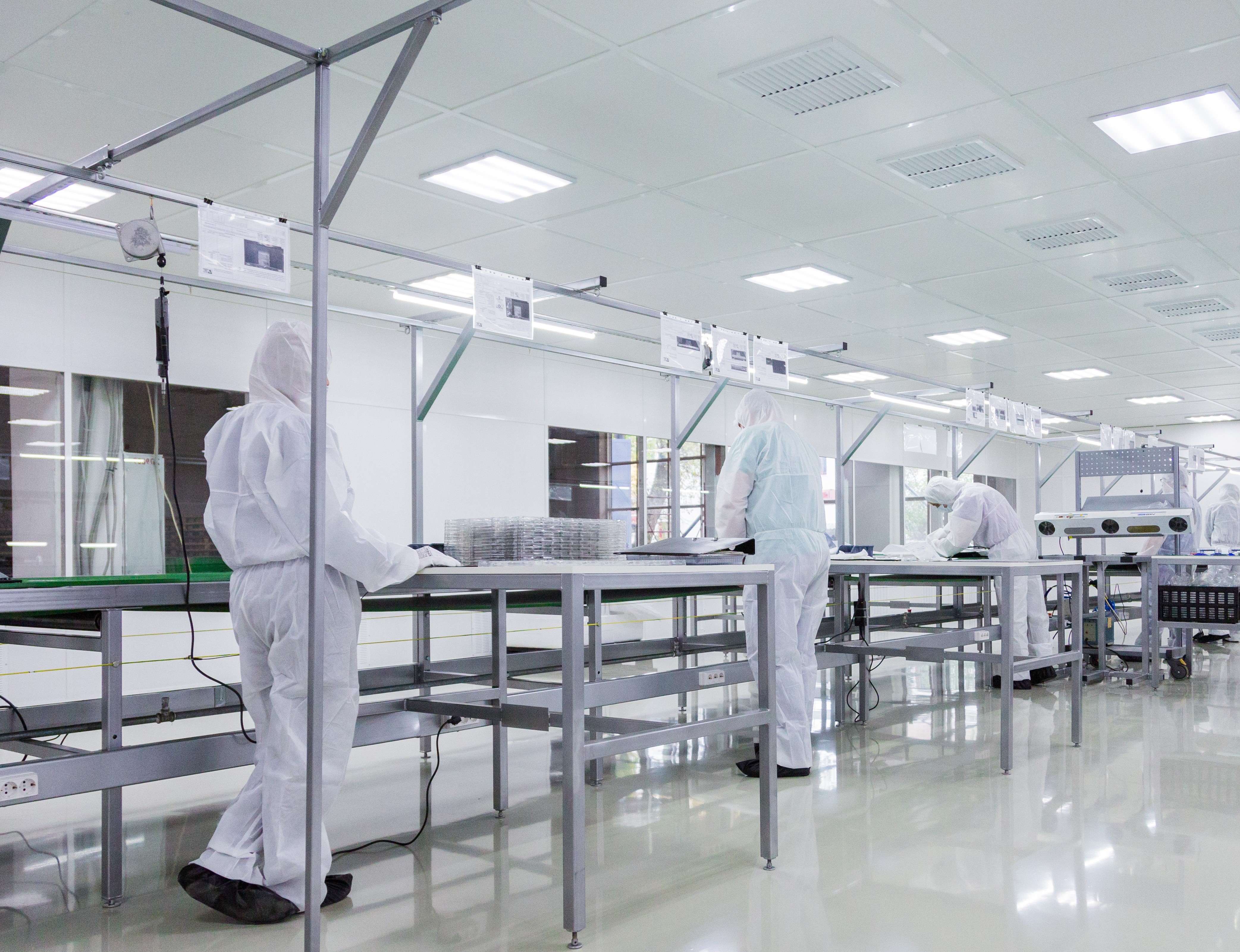
In environments where precision, safety, and compliance are non-negotiable, lighting is more than an illumination tool—it’s a critical system that must perform flawlessly. Whether in cleanrooms, laboratories, or high-stakes industrial facilities, even a brief failure can result in production losses, compliance violations, or serious safety risks.
So, how do you design lighting for spaces where downtime isn’t an option?
1. Reliability Starts with Quality Components Mission-critical facilities can tolerate almost no downtime – making component reliability paramount.
· High-quality components: Using high-grade components ensures system longevity, proper thermal management, and reliable performance, minimising flicker, failure, or degradation.
· Built-In quality standards: Choose fixtures compliant with GMP and ISO 14644, which guarantee particle control, durability, and cleanability.
· Fixture Cost vs Overall Budget: Despite cleanroom lighting usually representing less than 1% of installation costs, its impact on contamination and performance is outsized; the focus should be functionality over upfront savings.
2. Redundancy: The Safety Net for Continuous Operation
When failure isn’t an option, redundancy is your defense.
· Emergency lighting: Systems that switch seamlessly into emergency mode support safety and compliance – even in outages, through the means of emergency battery packs and power supplies.
3. Contamination Control & Environmental Resistance
Cleanroom lighting must withstand both environmental challenges and contamination protocols.
· Sealed and smooth construction: Fixtures should be gasketed, non-porous, and designed to prevent particle entry – this is vital for maintaining cleanroom standards.
· IP Ratings: Opting for at least IP65 or higher to ensure protection against dust, moisture, and frequent sanitation cycles.
· Corrosion-resistant materials: Stainless steel or powder coated aluminium withstand cleaning agents and sterilisation without degrading.
· Easy maintenance access: Designs featuring plenum/top access and recessed fitting minimise contamination risk during servicing.
4. Optimising Lighting Quality for Safety & Precision
Beyond uptime, the quality of light is critical in high-stakes environments.
· Adequate light level: Proper lux levels ensure accuracy in tasks, reduce errors, and support compliance with industry guidelines.
· Glare Control: Low-glare optics enhance visual comfort, reducing fatigue for operators in sensitive environments.
· Colour Quality: High CRI (Colour Rendering Index) and consistent colour temperature help workers perform precise tasks and inspections with confidence.
· Uniformity: Even light distribution reduces shadowing, ensuring clear visibility across work areas.
5. Future-Proofing with Smart Controls
Mission-critical facilities benefit from integrating intelligent lighting systems:
· Smart sensors: occupancy and daylight sensors reduce unnecessary energy use without compromising compliance.
· Central Monitoring: Connected lighting allows real-time monitoring and predictive maintenance.
· Adaptability: Tuneable white solutions can support both worker well-being and task accuracy in flexible workspaces.
· Fully Programmable: Smart sensors can be programmed to various different parameters to best suit the application's requirements, which in turn generates significant cost and energy savings.
Conclusion
In mission-critical environments, lighting is more than just a utility – it’s a safeguard for compliance, productivity, and safety. By prioritising reliability, redundancy, contamination resistance, and quality illumination, facilities can ensure uninterrupted operation and long-term performance.
At Patina, we specialise in designing and manufacturing lighting solutions for the most demanding environments – where failure simply is not an option.

